Finding the right agricultural export supplier is a lot, especially if you haven’t met them in person or known their core values. Beyond the price of their products, there’s a lot more to consider.
As an international buyer, you have to consider that every shipment carries its financial and reputational risk. Some might come in the form of a delayed container, inconsistent product quality, or incomplete export documentation, all of which can disrupt production schedules, damage customer relationships, and increase costs for your business.
This is especially true when sourcing agricultural commodities from Nigeria and other African markets. There are more exporters entering the global marketplace right now, giving you plenty of options to work with. However, you must understand that the suppliers that stand out are those that consistently deliver quality products, communicate clearly, and understand international trade requirements.
That’s why this article will be discussing the qualities experienced buyers look for before committing to a long-term relationship with an agricultural exporter. This works for all agricultural products, including cocoa, cashew nuts, shea butter, sesame seeds, garri, honey, bitter kola, moringa seeds, charcoal, and lots more.
What You Should Look for as an International Buyer When Searching for an Agricultural Export Supplier
Here are a few things you should look for when sourcing an agricultural export supplier to work with:
Consistent Product Quality Comes First
Quality is often the first thing most experienced buyers evaluate, and for good reason. A product sample may look excellent, but what matters is whether every shipment meets the same standard.
You want to be confident that the products you’re ordering have been properly processed, tested, and handled. Therefore, it’s necessary to expect consistency in factors such as moisture content, purity, grading, and overall quality across every order.
If you’re a food manufacturer or own a cosmetic brand, pharmaceutical company, or a nutraceutical business, then your quality requirements should even be stricter. It’s normal to expect suppliers to provide Certificates of Analysis (COA) and other quality assurance records that demonstrate every shipment meets agreed specifications.
The reason for all this is that consistency builds confidence in business, and when you’re confident of a supplier’s deliveries, it’s easier to trust and repeat business with them.
Proper Export Documentation Is Non-Negotiable
Even the highest-quality products can become expensive problems if the required paperwork is missing.
Experienced importers expect suppliers to have export documentation prepared before shipments leave the port. Depending on the destination country and product, this may include:
- Certificate of Origin
- Phytosanitary Certificate
- Fumigation Certificate
- Commercial Invoice
- Bill of Lading
- SGS or other independent inspection certificates where required
Having these documents ready helps shipments move through customs more efficiently and reduces unnecessary delays. This means you can accurately predict arrival time and schedule production better.
Experienced Buyers Want to Know Where Products Come From
Traceability has become increasingly important in international agricultural trade.
Many buyers, particularly those serving European and North American markets, want visibility into the supply chain. They want to know where products were sourced, how they were processed, and whether responsible sourcing practices are being followed.
Suppliers with established sourcing networks can provide this information with confidence. That level of transparency gives buyers greater assurance about the products they’re purchasing and helps strengthen long-term business relationships.
Reliable Supply Matters as Much as Quality
A supplier may offer excellent products, but buyers also need confidence that future orders can be fulfilled. This ensures you don’t halt production because of the lack of materials, as this will affect your relationship with customers.
Therefore, before placing large orders, your procurement team should ask practical questions such as:
- What are the minimum and maximum order quantities?
- Can production scale as demand increases?
- How does seasonal harvesting affect availability?
Honest answers are always better than unrealistic promises. Suppliers who communicate their production capacity should clearly earn more trust than those who agree to every request without considering their limitations.
Packaging Flexibility Adds Value
If you’re importing goods for retail, then you surely need them to come with better packaging, ready to be sold. This is true because it’s not every buyer that imports products for further processing.
Private label and white-label packaging services allow importers to launch their own branded products without investing in packaging facilities. Services such as custom labelling, barcoding, and retail-ready packaging can significantly reduce the time and cost required to bring products to market.
This means you have to look for exporters who are willing and knowledgeable enough to package your products the way you want them before shipping.
Reliable Logistics is an Important Consideration
A shipment is only successful when it reaches its destination safely and on schedule.
Most experienced international buyers often evaluate suppliers based on their logistics capabilities, including:
- The Incoterms they support, such as FOB or CIF
- Expected shipping timelines
- Relationships with experienced freight forwarders and shipping partners
Working with suppliers that understand export logistics helps reduce delays and gives you greater confidence throughout the shipping process.
Transparent Pricing and Secure Payment Terms
International trade depends on trust, and clear pricing is part of that.
Buyers appreciate suppliers who provide straightforward quotations, realistic minimum order quantities, and clearly defined payment terms from the beginning.
Many first-time transactions begin with trial orders of around 5 to 20 metric tonnes before buyers increase order volumes. Secure payment methods, including irrevocable confirmed Letters of Credit (L/C) at sight where appropriate, also help reduce risk for both parties.
When expectations are clear from the outset, negotiations tend to move more smoothly.
Compliance with International Standards
Experienced international buyers increasingly prefer suppliers that operate in line with recognized quality and food safety standards.
Depending on the destination market, buyers may look for compliance with Nigerian regulatory requirements, including NAFDAC and SON, alongside internationally recognized certifications such as HACCP, ISO, EU Organic, USDA Organic, or GlobalG.A.P., where applicable.
These certifications demonstrate commitment to quality and help you make better decisions about pricing and quality promises to your customers.
Communication Can Make or Break a Partnership
One factor buyers often mention that makes their transactions easy or difficult is communication.
Prompt responses, accurate information, and consistent updates create confidence and help reassure you that your goods are in safe hands. On the other hand, slow replies, unclear answers, or changing points of contact can raise concerns about how future orders will be handled.
Strong communication helps resolve issues quickly and lays the foundation for a productive long-term relationship.
Suppliers Who Think Beyond One Shipment
As an importer, you aren’t looking for a supplier for just one order. You’re most likely looking for a reliable partner who can support your business as it grows.
That means you need suppliers who can consistently deliver quality products, meet agreed timelines, maintain transparent communication, and adapt to changing customer needs.
Only a few suppliers understand how important this is to international buyers. That’s why those who take this long-term approach are more likely to earn repeat orders and lasting business relationships.
Why Many International Buyers Choose Elafoods
At Elafoods, we understand that successful agricultural exports depend on more than supplying quality products. Buyers need confidence at every stage of the process, from sourcing and quality control to documentation, packaging, and shipping.
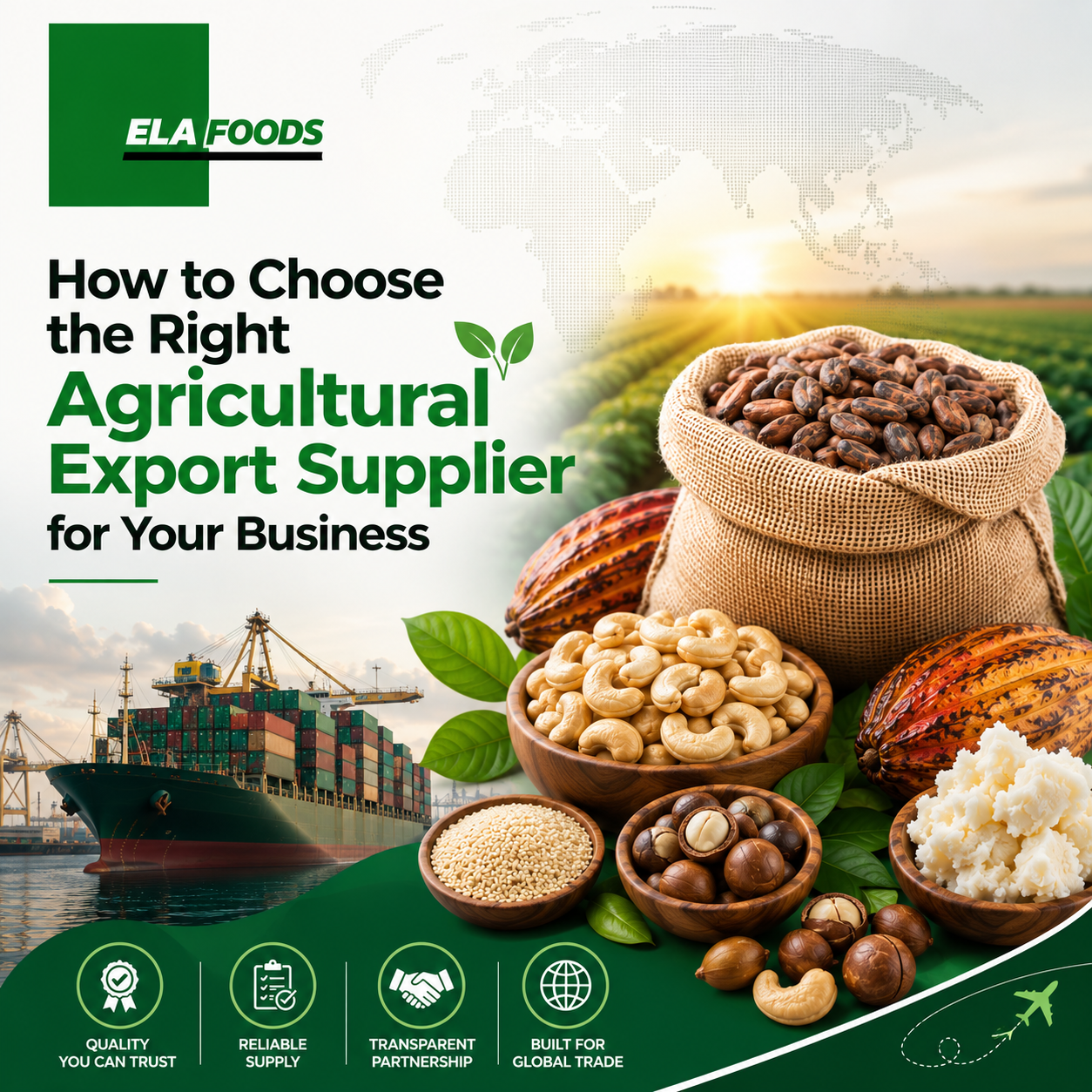
We supply a wide range of Nigerian agricultural commodities, including cashew nuts, cocoa, shea butter, sesame seeds, garri, honey, bitter kola, kola nut, moringa seeds, egusi, charcoal, and more. Our products undergo quality checks, are supported by complete export documentation, and are available with private label packaging for businesses looking to build or expand their own brands.
We also work with companies across the food and beverage, cosmetics, pharmaceutical, and animal nutrition industries, providing dependable export solutions tailored to their sourcing requirements.
If you’re looking for a trusted agricultural export partner in Nigeria, Elafoods is ready to help you source quality products with the professionalism and reliability your business deserves.
Visit – https://elaagroexport.com.ng/
Send us an email – tosinxx@gmail.com
Call – +234913 915 7637